
How To Monetize An Email List Without Annoying Your Subscribers


You’ve built an email list to stay connected with your audience. But are you making the most of it?
Email marketing is more than a way to share updates. When done right, it can become a reliable revenue channel on its own.
In this post, you’ll learn how to monetize your list without overwhelming your subscribers with constant sales messages and turn your emails into a steady source of income.
Let’s get into it.
1. Sell a premium newsletter subscription
This is actually something you can do if you use an email marketing tool that offers this feature.
MailerLite, in particular, allows you to offer a paid newsletter subscription by accepting payments through Stripe.
You can offer one-time subscriptions or recurring subscriptions.
The tool will segment paying subscribers from free subscribers to ensure you only send premium newsletters to paying subscribers.
But what kind of content can you offer in a premium newsletter? Anything you feel is too high quality for your regular content channels, takes too much time and effort to create, or just doesn’t quite fit into your normal publishing schedule.
Here are examples of premium content you can offer paying subscribers:
- Extra content
- Early-access to content
- Exclusive interviews
- Long-form guides with downloadable PDF instructions
- Email courses
- Q&As
- Coaching
- Personal advice
- Research-based content
A wonderful example of a paid newsletter is The Browser.
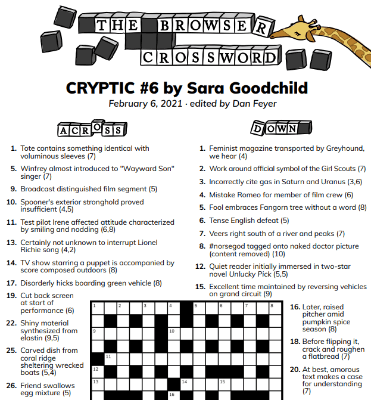
For $5/month, you can receive weekly emails filled with curated content, specifically five articles picked from hundreds of articles published that week.
Sunday’s email contains a crossword, quiz and more.
2. Promote affiliate links
Most content creators only promote affiliate links in blog posts and social media posts. They then use their email lists to promote those posts.
But if you use your email list as another content channel, you can actually generate affiliate revenue by promoting links directly in newsletters.
At the same time, it’s important that you use this technique with caution.
Some affiliate programs don’t allow you to promote affiliate links in emails, and some email marketing services don’t want you to insert them into email copy.
Check your email marketing service’s terms and conditions as well as the terms and conditions of each affiliate program you’re a part of to determine if you’re able to use this monetization strategy.
Ask each organization’s support team if you’re not sure.
As for how to promote affiliate links, follow the same rules as you would when you use affiliate marketing in regular content channels:
- Only promote products you’ve tested yourself
- Only promote products that relate to your niche or suit your target audience
- Try to include original images whenever possible
- Share your review of the product
- Share the product’s best features and how they would benefit your reader
- Provide tutorials and tips that demonstrate how to use the product
- Add an affiliate disclaimer somewhere in your email
When you promote products in emails, avoid using phrases that can banish your emails to the spam folder.
They include words and phrases like “free,” “discount,” “$$$” and “deal.”
3. Publish sponsored emails
Just as you can publish sponsored posts on your blog or social media profiles, you can publish sponsored emails as well.
Sponsorships refer to transactions you make with a brand. They pay you a specified sum of money in exchange for appearing in your content.
Exactly how they appear in your content and to what degree is up to you. It’s mostly determined by the negotiations you make with the sponsor and how much they’re willing to pay you.
If it’s a smaller amount of money, include a short blurb about their product in your email.
If it’s a larger amount of money, dedicate an entire email to their product.
You can also accept a hybrid sponsorship in which a brand pays you a smaller amount of money in exchange for offering you an exclusive commission rate for affiliate links.
As for how to acquire sponsorships, include a Sponsor Me link in the footer of your email as well as in navigation menus on your website. You can also include it in your link-in-bio page.
If you’re going to try your hand at cold emailing, create a media kit that demonstrates why brands should sponsor you.
4. Include ads in your emails
This one is tricky and has the highest likelihood of ticking off your audience. Proceed with caution.
Internet users are already annoyed by the ads they have to view while they browse something as private as their inboxes.
You run the risk of irritating them even further by also including ads in your email copy.
At the same time, if you use an ad network like Paved, you can fill ad spaces with ads from brands like Uber, Doordash, Square, Notion, Monday, Marriott, Salesforce and more.
Here’s how this service works: Paved gives you a code snippet to insert into ad space in your newsletter. They then match your newsletter with relevant, high-quality advertisers and fill that ad space in automatically.

The tool then uses its algorithm to get you the highest amount of revenue possible for your brand and the audience you’ve built.
The service is used by publishers like Entrepreneur, Smashing Magazine, TechCrunch, Hacker News, Fortune, Inc., Fast Company and more.
Other ad networks optimized for newsletters include Admailr, whose advertisers include Disney, Netflix, Hulu, HBO and Amazon Studios, and LiveIntent, whose advertisers include Overstock, Groupon, Nordstrom Rack and Manscaped.
Of course, you can also sell ad space to advertisers directly.
Not only does this put you at the negotiating table, it allows you to vet advertisers until you find the perfect one for your audience.
5. Sell your own products
Let’s transition into monetization strategies that require you to use your email list as a marketing channel.
First up is products.
You earn a lot of revenue by promoting affiliate links and selling ad space, but these methods will always require you to promote another company’s products.
This is problematic for a few different reasons, the main one being the amount of instability it brings to your brand’s revenue strategy.
You don’t have much control when your entire revenue strategy is built on someone else’s product.
The following can have a profound effect on your revenue, none of which you have any control over:
- Brand decreases affiliate commission rates
- Brand shuts down affiliate program
- Brand stops sponsoring content and buying ads
- Product goes out of style
- Product’s brand takes a reputation hit
If you offer your own products, you’re always in control of the amount of revenue you receive.
You can raise and lower prices as much as you want, release new products, and not have to worry about splitting revenue with advertisers.
Here are a few products you can sell and promote through your email list:
- Digital – Ebooks, downloadable assets, workbooks, etc.
- Physical – Books, products you research and develop on your own, dropshipped products, etc.
- Merch – T-shirts, hoodies, hats, mugs, etc. All with your branding attached
- SaaS – Software as a service, such as apps
If you want to sell your own products, consider using an ecommerce platform like Sellfy.
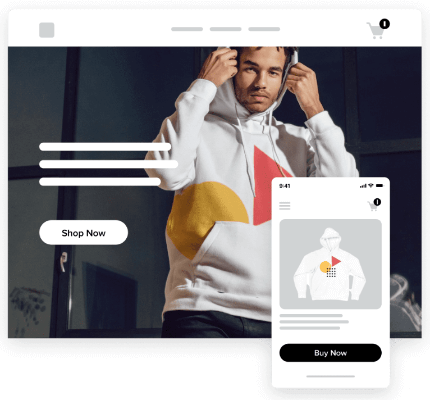
It lets you sell digital products, print-on-demand products like merch, and physical products.
It’s an all-in-one ecommerce platform that includes hosting, customizable web design, marketing, payment gateways and security.
Many email marketing services even allow you to insert products directly in emails.
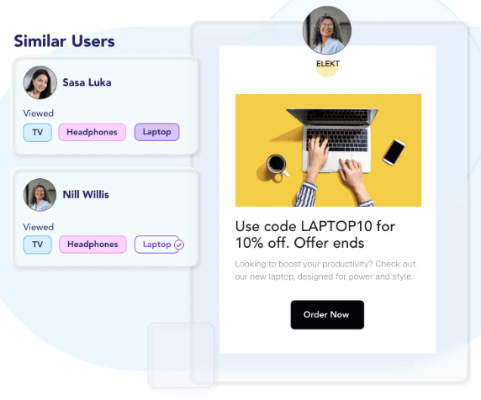
Moosend, in particular, lets you include product recommendations that are based on your subscriber’s interests and purchase history.
6. Sell your services
If you have skills related to your niche, consider offering them as services to your audience.
Build a “Hire Me” page for your website, and add your skills, services you offer and portfolio items to it.
The most important elements this page should have is a contact form and your contact information.
Add links to this page in navigation menus across your site as well as the footer section of your emails.
If members of your audience are in need of your service, they’ll be able to observe your expertise in your content. They may then reach out for a quote if they’re in need of your services.
7. Sell online courses
If you have a niche you can teach, you have a niche you can create online courses for.
An online course is a long-form guide you present in an organized structure, specifically as several different lessons broken up into different sections or chapters.
Many courses are video based, but you can also create text-based courses.
Thinkific is a fantastic online course platform to use to build and host an online course.
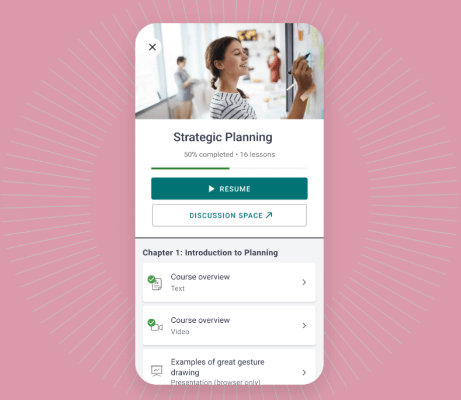
Not only does it allow your students to complete courses using an intuitive, well-built user interface, it offers several additional features that allow you to build a community and even a membership site.
Like products, you can use your email list to promote your course and even drip content for it.
Click here to try Thinkific for free.
8. Nurture your subscribers
As you gain more and more subscribers through your blog and social media channels, you have the opportunity to nurture them into becoming customers.
The best way to do this is to offer a lead magnet related to a product or service you want to sell. For example, many course instructors offer free email courses that can be completed in four emails or less.
When they send that last email, they let their subscriber know they have a premium course that expands on the topic.
This is just one example of how you can use your email list to offer value to your subscriber before you ask them to buy.
You should also segment your subscribers based on the lead magnets they take advantage of.
If you own a music blog and one of your subscribers joined your email list to take your email course on learning power chords for the guitar, add them to a segment called “Beginner Guitarist”.
Whenever you create emails that target beginner guitarists, you can select this segment to ensure the email only sends to subscribers who are part of it.
Targeted content helps you nurture your subscribers in a gentle way by ensuring you only fill their inboxes with topics that interest them.
9. Upsell products and services
Upselling products and services to a community you’ve grown and fostered through authenticity and high value can be difficult, but it’s also quite doable.
You just need to make sure that whatever you attempt to upsell is truly valuable and will benefit your reader.
The beauty of email marketing services that integrate with ecommerce services is that they’re able to segment and tag your subscriber based on what they’ve purchased from you.
You can then use those segments and tags to set up marketing automations that trigger emails made just for them.
So, if they buy Product A, you can set up a marketing automation that promotes Product B to them a couple weeks later.
During that time, you should set up additional marketing automations that provide your customer tips on how to use Product A and your website in general.
Basically, try to offer as much value to them as possible while also waiting a few days between emails to avoid flooding their inbox.
It’d be helpful if Product B directly relates to Product A. This ensures your upselling technique is as authentic as possible.
If not, just be sure your email articulates how Product B relates to Product A and how much it will benefit your subscriber.
10. Include a tip jar link in your email footer
If your newsletters hold a lot of value, some of your subscribers may feel compelled to compensate you.
They might ask if you have a PayPal or Venmo link they can send money to or maybe even a Patreon.
While you don’t necessarily need to get as technical as creating an entire Patreon page for premium content, you can include a link to a digital tip jar in the footer of your emails.
This is something Janel Loi does with her newsletter BrainPint.
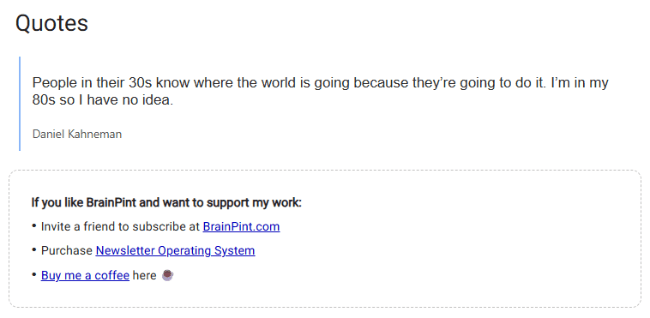
She includes a link to her Buy Me a Coffee page at the bottom of every email.
Buy Me a Coffee is a payment service you can use to accept donations from your subscribers on a one-time or monthly basis.
You can set up predetermined tiers for your supporters to pick from, and they can also offer custom accounts.
Unlike Patreon, you aren’t obligated to offer supporters perks, but you can publish posts to your page.
Ko-fi is a similar service.
11. Build a membership site
If you want to combine a few of these strategies, build a membership site, and use your email list to promote and communicate with your community.
With a membership site, you can charge subscriptions for access to premium content, courses, resources, forums and more.
Your email marketing service will allow you to create separate segments for members and non-members, which you can use to send premium newsletters to paying members.
This is another use case for Thinkific. Sure, you can build a dedicated membership site with a WordPress plugin, but Thinkific has everything built for you plus it hosts the site for you.
You can offer courses, an online community, digital downloads, coaching sessions, webinars and more.
12. Host events
Events offer fantastic opportunities for you to give back to your email list.
They can include something as expensive as an in-person conference or workshop, but you can also offer digital events by hosting coaching sessions and webinars.
You can market the event to your subscribers, who will buy tickets to it, especially if you’ve segmented and nurtured them properly.
These events can be quite expensive, so it’s best to come up with a concept that holds a lot of value to your subscriber.
Consider sharing a method you use to accomplish something in your niche that only paying attendees will have access to.
Make sure the event will be public so your entire audience can participate. This is the key to a successful event. It allows your subscribers to interact with one another while also allowing them to interact with you.
Treat your email list as another content channel
Most content creators treat their email lists as marketing channels for their primary sources of content, such as their blog and social media profiles.
Unfortunately, in a world of short-form content and instant gratification, that extra step that requires your subscriber to click through to your blog or social media post may simply be too much.
Does that mean you should stop promoting your latest content through your email list?
Certainly not, but it does mean you should try to set yourself apart from other email marketers by offering original content your subscribers can only read by subscribing to your list.
This is something Entrepreneur’s Editor in Chief Jason Feifer does with his email list.
One Thing Better is a newsletter Jason writes on a weekly basis that includes at least 1,000 words of content. Topics include inspirational career and life advice, which is on brand for the editor in chief of a business magazine.
By writing compelling content you only send through your newsletter, you give your subscribers more of a reason to subscribe and stay engaged.